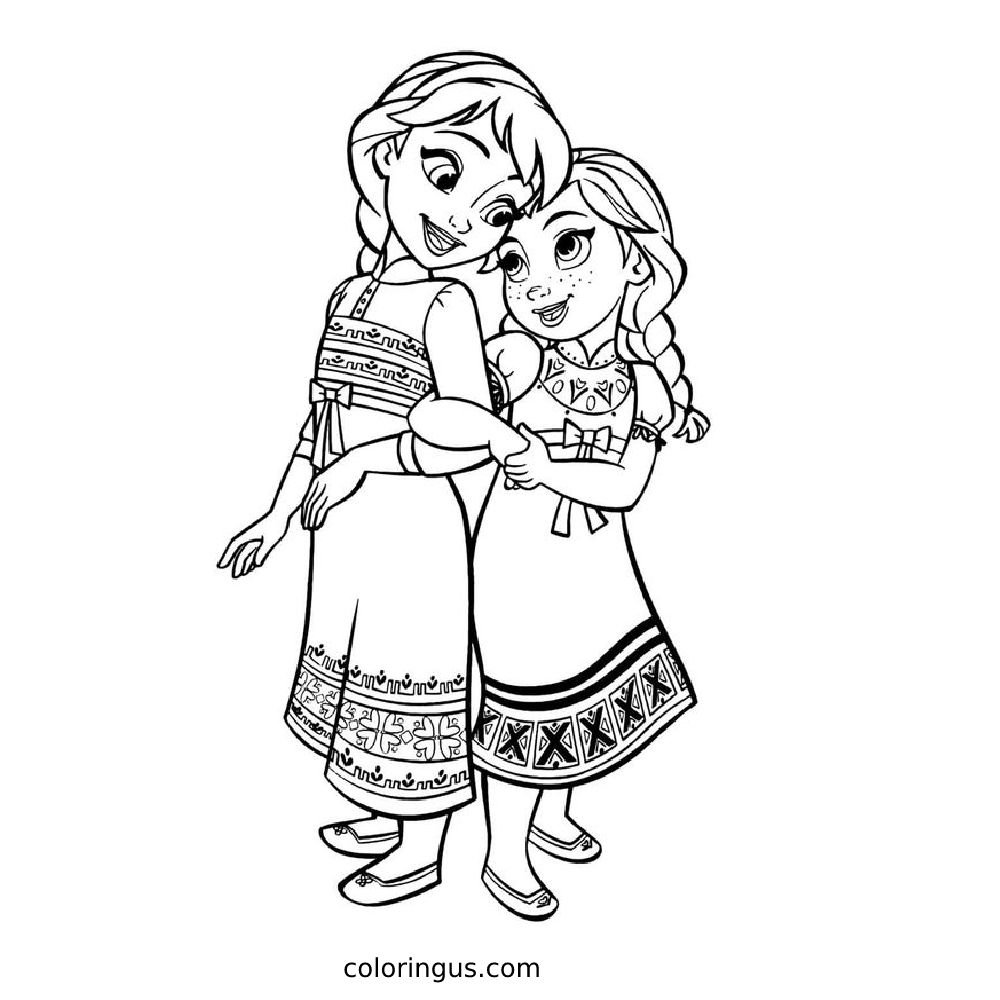
Since their debut, the sisters of Arendelle have captivated audiences worldwide, evolving from animated royalty into complex, relatable figures whose journeys resonate deeply. Diving into the intricate Elsa & Anna Character Lore & Storylines reveals more than just a fairy tale; it uncovers narratives of self-discovery, sisterly bond, and the courage to embrace destiny. Their story isn't static; it's a dynamic tapestry woven with fear, love, sacrifice, and ultimately, empowerment, making them two of Disney's most compelling creations.
Elsa & Anna: At a Glance
- Elsa: The older sister, Princess turned Queen of Arendelle, gifted with magical ice and snow powers. Her journey is about overcoming fear and embracing her true self, eventually becoming the Fifth Spirit, a bridge between humanity and nature.
- Anna: The younger, extroverted sister, initially a princess, later Queen of Arendelle. Her path is marked by unwavering optimism, boundless love, and a fierce determination to protect those she cares about, especially Elsa.
- Origins: Loosely inspired by Hans Christian Andersen's "The Snow Queen," but reimagined to focus on sisterly love and an internal struggle rather than a villainous role.
- Key Films: "Frozen" (2013), "Frozen 2" (2019), and "Frozen 3" (scheduled for 2027).
- Core Theme: The enduring power of true love, particularly the bond between sisters, and the importance of self-acceptance.
From "Snow Queen" Antagonist to Sisterly Archetypes: The Genesis of Arendelle's Icons
The tale of "Frozen" has a longer, more winding history than many realize, tracing back to Walt Disney's initial attempts in 1937 to adapt Hans Christian Andersen's chilling fairy tale, "The Snow Queen." For decades, the project languished in development hell, primarily because the titular character was too villainous and unrelatable for Disney's family-friendly storytelling. The core challenge was transforming a cold, heartless antagonist into a sympathetic protagonist.
The breakthrough arrived when Chris Buck and Jennifer Lee decided to make Elsa and Anna sisters. This pivotal choice reframed the entire narrative, shifting the conflict from an external battle against a villain to an internal struggle within a family. Elsa's powers, once a source of evil, became a metaphor for her inner fears and anxieties, turning her into a misunderstood figure driven by the unintentional harm she could inflict. This transformation allowed for the exploration of themes like self-acceptance, the fear of power, and the profound strength of sibling love, ultimately giving us the iconic characters we know today. This fundamental change is key to understanding how these characters resonate so deeply, inviting audiences to Explore Elsa and Annas world and its rich tapestry of emotional depth.
Meet the Queens: Deep Dive into Anna's Character Lore
Anna is the beating heart of Arendelle, a vibrant contrast to her more reserved sister. Her character arc is a journey from sheltered longing to courageous leadership, fueled by an unwavering spirit and an boundless capacity for love.
Anna's Defining Personality Traits
If Elsa represents the ice, Anna embodies the warmth. She is an extrovert in every sense, yearning for connection and adventure after years of isolation. Her social nature makes her eager to interact with anyone, from charming princes to gruff ice merchants and talking snowmen. Anna is intensely curious about the world beyond Arendelle's castle walls, a trait that drives her intrepid quests.
She's often fun-loving, active, and enthusiastic, prone to spontaneous bursts of song and grand gestures. This exuberance can sometimes make her appear awkward or clumsy, a charming imperfection that further endears her to audiences. Beneath the surface, Anna possesses a steely determination and fierce loyalty, especially when it comes to her sister. She acts before thinking, often diving headfirst into danger, a testament to her courage and her belief in the good of others. Her optimistic outlook, even in the direst circumstances, makes her a beacon of hope throughout both films.
Anna's Distinctive Appearance
Anna’s physical design complements her lively personality. She’s depicted as a slender young woman with a youthful appearance.
- Age: Approximately 18 years old in "Frozen," maturing to 21 in "Frozen 2."
- Hair: Her iconic strawberry blonde hair is often styled in braids, sometimes adorned with ribbons. A signature platinum-blonde streak, a remnant of Elsa's accidental magic, serves as a visual reminder of their shared past.
- Skin: Fair, with a scattering of freckles across her nose and cheeks.
- Facial Features: A delicate, turned-up nose, thin lips, and striking large turquoise-blue eyes that reflect her emotional depth and expressiveness.
Anna's Memorable Attire
Anna's wardrobe reflects her journey and personality, moving from formal regality to practical adventurer.
- Coronation Dress: For Elsa's coronation, Anna wears a sophisticated yet youthful outfit: a black sweetheart bodice paired with dark green off-shoulder straps. Her olive-green pleated skirt is adorned with traditional Norwegian rosemaling patterns, a nod to her heritage. A necklace and delicate hair ribbons complete the look, symbolizing her role as a princess eager for her sister's big day.
- Journey Dress: This iconic ensemble speaks volumes about her adventurous spirit. It features a practical black bodice and a rich royal blue skirt, often worn over a light blue long-sleeved blouse. Her vibrant magenta cape with tassels provides warmth and a pop of color, while a fur-trimmed cap offers protection from the elements. Practical black leather boots with magenta soles and turquoise-blue mittens are essential for her quest through the treacherous winter landscape. This outfit symbolizes her determination to find Elsa and restore summer to Arendelle.
The Ice Queen's Heart: Exploring Elsa's Character Lore
Elsa stands as one of Disney's most complex and celebrated characters. Her lore delves into themes of hidden power, the burden of responsibility, and the profound liberation found in self-acceptance. From a potential villain in early drafts, she transformed into a sympathetic protagonist grappling with a truly unique challenge.
Elsa's Intricate Personality
Elsa is the epitome of an introvert, naturally drawn to quiet contemplation rather than bustling social interaction. She is fundamentally careful and reserved, a demeanor born from years of suppressing her powerful magical abilities to protect those she loved. While outwardly calm, especially in her regal bearing, she possesses profoundly powerful underlying emotions that, when unchecked, can manifest in devastating ways.
At her core, Elsa is fiercely protective, caring, and nurturing, particularly towards Anna. Her actions, even her initial isolation, stem from a place of deep love and a desperate fear of unintentionally harming her sister. Her journey is defined by learning to channel these emotions, transforming her fear into strength and her isolation into a bridge between two worlds. Her path is one of self-discovery, understanding that her powers are not a curse but a gift that allows her to fulfill her unique destiny.
Elsa's Striking Appearance
Elsa's design, carefully refined during development, projects an image of regal elegance, ethereal beauty, and latent power.
- Age: She is 21 years old during the events of "Frozen" and 24 in "Frozen 2," reflecting a mature, queenly presence.
- Hair: Her most distinctive feature is her long, flowing platinum blonde hair, which required a staggering 420,000 CGI threads to animate, far surpassing other Disney characters like Anna (140,000) or Rapunzel (27,000). This hair often signifies her state of being—a tight coronation braid for repression, a loose side braid for liberation.
- Skin: She has fair skin, complementing her cool-toned aesthetic.
- Facial Features: Like Anna, she has a thin, turned-up nose and thin lips, but her large blue eyes often carry a weight of emotion and wisdom. She inherently favors blues and purples in her attire, reflecting her ice magic.
Elsa's Iconic Attire
Elsa's costumes are central to her character's narrative, evolving with her emotional state and the manifestation of her powers.
- Coronation Dress: Before embracing her magic, Elsa wears a restrictive yet elegant coronation gown. It features a teal a-line skirt with intricate rosemaling, a modest sweetheart neckline, and long black sleeves that visually contain her power. A majestic long magenta cape adds a regal touch, while her hair is meticulously styled in a crown braid under a small gold crown. Crucially, she wears long turquoise gloves, a constant reminder of her need to conceal her abilities. This dress represents her struggle to conform to expectations while suppressing her true self.
- Ice Dress ("Let It Go" Dress): This is arguably Elsa's most famous and transformative outfit. Born from her moment of liberation on the North Mountain, this crystal-blue off-shoulder dress is a literal manifestation of her power. Its bodice is intricately fashioned from crystals, sparkling like freshly fallen snow, and it features a dramatic knee-high slit for movement. Transparent light blue sleeves and a magnificent long flowing cape patterned with snowflakes further emphasize her command over ice. Her hair is unbound into a loose side braid, symbolizing her freedom. Paired with delicate kitten heels made of ice, this dress is not just clothing; it's an extension of her magic and her newfound identity.
The Voice of Power and Vulnerability
Idina Menzel's casting as Elsa's voice actor was instrumental in shaping the character's profound impact. Menzel's extraordinary vocal range and her ability to convey both raw vulnerability and immense strength were perfectly suited for Elsa's complex emotional landscape. Her performance of "Let It Go" became an anthem for self-acceptance, showcasing Elsa's journey from fear to empowerment. Animators even painstakingly matched Elsa's breathing and facial expressions to Menzel's performance, adding an unparalleled layer of realism and emotional depth to the character.
The Evolution of Elsa's Design
Elsa's visual journey was just as complex as her emotional one. Early design concepts, influenced by artists like Amy Winehouse, depicted a much darker character with blue skin and spiky black hair, closer to a traditional villain. However, as the story shifted to focus on sisterhood, Elsa's design softened, becoming more aspirational and regal. Her iconic thick platinum blonde hair, meticulously rendered with millions of CGI threads, became a visual metaphor for her unique magic and ethereal beauty. The design of her ice gown and the breathtaking ice palace were carefully crafted to reflect her maturing powers and evolving emotions, with every snowflake motif telling a part of her story. This attention to detail ensured that Elsa was not just a character, but an experience.
The Journey Begins: "Frozen" - A Story of Fear, Love, and Self-Acceptance
The first "Frozen" film introduces us to the core conflict and the deep bond between the two sisters. It's a tale steeped in misunderstanding, the pain of isolation, and the ultimate triumph of true love.
A Childhood of Secrets and Separation
The story begins with a glimpse into Elsa's innate magical abilities to create and manipulate ice and snow, a power she keeps secret from her younger sister, Anna. During a playful night, Elsa accidentally hits Anna with a blast of ice magic, causing a platinum-blonde streak in Anna's hair and threatening her life. Grand Pabbie, leader of the rock trolls, intervenes, altering Anna's memory of the magic to protect her, leaving her with no recollection of Elsa's powers.
This incident, however, traumatizes Elsa, leading her parents to encourage her to isolate herself and "conceal, don't feel." She begins wearing gloves to suppress her powers, a physical manifestation of her emotional repression. The emotional distance between the sisters grows, even after their parents, the King and Queen of Arendelle, tragically die at sea, further deepening Elsa's burden of grief and secret.
Coronation Chaos and a Kingdom Frozen
Years later, at 21, Elsa is to be crowned Queen of Arendelle. The gates of the castle open for the first time in years, bringing joy and a chance for connection, particularly for the sheltered Anna. Anna quickly falls for and becomes engaged to the charming Prince Hans of the Southern Isles. Elsa, still grappling with her fears and responsibilities, refuses to bless the hasty engagement.
This disagreement escalates into a heated argument, during which Elsa accidentally unleashes her powers in front of the horrified court. Panicked by her uncontrolled magic, she flees to the North Mountain, inadvertently trapping Arendelle in an eternal winter as she goes.
The Birth of the Ice Queen
On the desolate North Mountain, far from the judgment and fear of others, Elsa finally allows herself to embrace her powers. In a monumental act of self-liberation, she builds an elaborate ice palace, constructing it brick by shimmering brick through sheer will and magic, culminating in the iconic "Let It Go" sequence. Here, she transforms her appearance and her mindset, shedding the gloves and the fear, believing isolation is the only way to protect her loved ones.
Anna's Quest and a Frozen Heart
Determined to bring her sister back and lift the eternal winter, Anna sets out on a perilous journey. Along the way, she encounters the rugged ice harvester Kristoff, his loyal reindeer Sven, and Olaf, a cheerful snowman unknowingly brought to life by Elsa's magic during her "Let It Go" moment. This unlikely trio forms the core of her support system.
When Anna finally reaches Elsa's ice palace, a heartfelt but tense confrontation ensues. Elsa, still fearful of hurting Anna, accidentally strikes her in the heart with ice magic during an argument. This injury begins to freeze Anna's heart, a wound that Grand Pabbie later reveals can only be cured by "an act of true love."
Betrayal, Sacrifice, and True Love's Kiss
Back in Arendelle, Hans reveals his true, villainous plot: to marry Anna, then orchestrate Elsa's death to seize the throne for himself. Elsa is captured and imprisoned, but her fear and despair only intensify the winter. She eventually escapes, her powers spiraling out of control.
As Anna's heart rapidly freezes, Kristoff races her back to Arendelle, believing true love's kiss from him will save her. However, Anna, witnessing Hans about to strike down a weakened Elsa, makes a selfless choice. She sacrifices herself to save her sister, stepping in front of Hans's sword and freezing solid. This powerful, selfless act of sisterly love thaws her heart, demonstrating that "an act of true love" is not limited to romantic love.
Reconciliation and a Kingdom Thawed
Witnessing Anna's sacrifice and subsequent revival, Elsa finally understands. It was not suppression, but love, that held the key to controlling her magic. With newfound confidence and understanding, she reverses the eternal winter, restoring summer to Arendelle. The sisters reconcile, their bond stronger than ever. Elsa reclaims her role as Queen, now ruling with open arms and a joyful heart, demonstrating how embracing one's true self can lead to genuine happiness and harmony.
Into the Unknown: "Frozen II" - Unraveling Arendelle's Past and Elsa's Destiny
"Frozen II" delves deeper into the origins of Elsa's powers, the history of Arendelle, and the sisters' evolving roles in a world far more magical than they initially knew. It's a story of uncovering truth, accepting change, and finding one's true calling. If you're eager to truly immerse yourself in their ongoing saga, then you need to delve into the history of Elsa and Anna and their incredible journey.
A Mysterious Voice and Awakened Spirits
Years after the events of "Frozen," Arendelle is thriving under Elsa's rule. However, Elsa begins hearing a mysterious, alluring voice calling to her from beyond the fjord. Unbeknownst to her, her responses to this voice unintentionally awaken the elemental spirits of the Enchanted Forest—the Earth Giants, the Wind Spirit (Gale), and the Fire Spirit (Bruni)—who had been enraged and trapped for years. This awakening plunges Arendelle into chaos, forcing the evacuation of its citizens.
Grand Pabbie, the wise troll leader, reveals that Arendelle's past is not what it seems and that the spirits are angry due to an ancient wrong. He advises Elsa, Anna, Olaf, Kristoff, and Sven to journey to the Enchanted Forest to uncover the truth and restore balance.
The Enchanted Forest and the Fifth Spirit
Entering the mist-shrouded Enchanted Forest, the group encounters the indigenous Northuldra tribe and a contingent of Arendellian soldiers, both trapped since a past conflict. Elsa, using her powers, quickly tames the mischievous wind spirit, Gale, and the fiery Bruni. Through her interactions with the spirits, she creates ice sculptures that reveal fragments of her parents' past, particularly her father King Agnarr's memories of the Northuldra.
Here, Elsa learns a profound truth: she is the Fifth Spirit, a magical being destined to bridge the gap between people and nature. She also discovers that her mother, Queen Iduna, was a Northuldra woman who saved Agnarr during the initial conflict. Elsa's powers were not random but a magical gift, bestowed upon her as a reward for Iduna's selfless act of saving an enemy. This revelation transforms Elsa's understanding of herself, her powers, and her family's heritage.
Ahtohallan's Secrets and the Dam's Deception
Feeling the call of the mysterious voice growing stronger, Elsa leaves her companions to travel alone to the mythical river of Ahtohallan, believing it holds all the answers about her powers and the past. On her journey, she encounters and tames the majestic water spirit, Nokk, who carries her across the dark sea.
At Ahtohallan, Elsa learns the full, painful truth: the dam built by her grandfather, King Runeard, in the Enchanted Forest was not a peace offering to the Northuldra but a tactical ruse to weaken them. Runeard, fearful of the Northuldra's magic, initiated the conflict by attacking their unarmed leader. This act of treachery created the imbalance that enraged the spirits. Elsa also realizes that the mysterious voice was her mother, guiding her to this truth.
Sacrifice, Revelation, and a Kingdom Saved
The truth about Runeard's actions is too much for Elsa to bear alone. She sends this crucial information to Anna via ice memories, but the strain of the revelations, coupled with the magical energies of Ahtohallan, causes Elsa to become frozen solid. As the Fifth Spirit, her freezing causes Olaf, who is magically linked to her, to fade away, symbolizing a temporary loss of hope.
Armed with the truth, Anna realizes that the dam, built on a lie, must be destroyed to appease the spirits and restore peace to the Enchanted Forest. This act, however, would send a destructive wave towards Arendelle. Anna, with Kristoff's help, awakens the Earth Giants, leading them to break the dam. This courageous act brings peace to the forest but threatens to engulf her beloved kingdom.
Just as the devastating wave approaches Arendelle, Elsa thaws, revived by Anna's heroic act and the restoration of balance. She races back, using her immense powers to create an ice barrier and save Arendelle from the dam's destructive force. With balance restored, Elsa revives Olaf, bringing joy and warmth back.
New Roles and a Unified World
With the truth revealed and harmony restored, Elsa realizes her true place is as the protector of the Enchanted Forest, symbolizing her role as the magical end of the bridge between humanity and nature. She abdicates the throne to Anna, who is perfectly suited to rule Arendelle, having proven her wisdom, courage, and leadership.
The film concludes with Anna as the beloved Queen of Arendelle and Elsa as the free, powerful guardian of the Enchanted Forest. Their sisterly bond remains the bedrock of their world, but their individual destinies have led them to distinct yet equally vital roles, ensuring that both the magical and human realms thrive in harmony. This powerful resolution solidifies their place as heroes who don't just solve problems but actively evolve with them, inviting fans to perpetually explore Elsa and Anna's world and its new dynamics.
Beyond the Screen: Cultural Impact and Enduring Legacy
The impact of Elsa and Anna extends far beyond the animated screen, cementing their status as cultural touchstones and inspiring millions worldwide.
Critical Acclaim and the Power of Sisterhood
Elsa, in particular, received widespread critical praise for her complex characterization, her vulnerability, and the powerful message she presented to young girls. Reviewers celebrated her as a deeply sympathetic figure struggling with fear, self-acceptance, and the burden of extraordinary power. The solution to Disney's decades-long "Snow Queen" problem—making Elsa and Anna sisters—was lauded as a stroke of genius, transforming a potential villain into a relatable hero.
Many critics highlighted the relationship between Elsa and Anna as the film's most important aspect, hailing sibling love as the ultimate "act of true love." This shift from traditional romantic narratives resonated strongly with audiences, offering a fresh, empowering perspective on familial bonds. The characters' internal struggles and emotional arcs made them compelling figures that broke free from conventional fairy tale molds.
A Metaphor for Mental Health
Elsa's character quickly became a powerful metaphor for mental illness and emotional dysregulation, particularly anxiety and depression. Her struggles with concealing her powers, her forced isolation, and her constant fear of harming others mirror the experiences of many who grapple with invisible battles. Her journey of learning to understand, accept, and control her unique abilities offered a compelling narrative of finding strength in vulnerability and embracing one's true self, even when it feels overwhelming. This interpretation provided a deeper, more resonant layer to her story, allowing many to find solace and understanding in her journey.
Awards, Influence, and Unprecedented Success
The animation and character design for Elsa received significant recognition, earning her three Visual Effects Society Awards in 2013, including Outstanding Animated Character. The film's iconic song, "Let It Go," performed by Idina Menzel, won both an Academy Award for Best Original Song and a Grammy Award, becoming a global phenomenon.
Elsa's influence permeated popular culture. Time magazine notably ranked her as the most influential fictional character of 2014, a testament to her widespread appeal and the depth of her impact on audiences of all ages. This recognition underscores the profound connection people felt with her story and her struggle, solidifying her place as a truly iconic figure.
Arendelle Across Universes: Elsa & Anna in Other Media
The world of Elsa and Anna isn't confined to the main feature films; their adventures and presence span a multitude of other media, from short films and TV series to video games and live theatrical productions.
Short Films & Television Appearances
Their story continued in the short film "Frozen Fever" (2015), where Elsa attempts to throw Anna the perfect birthday party despite her lingering cold powers. They also starred in the holiday special "Olaf's Frozen Adventure" (2017), which explored Arendellian Christmas traditions. Beyond their own universe, Elsa made a memorable cameo alongside other Disney Princesses in "Ralph Breaks the Internet" (2018) and briefly appeared in "Once Upon a Studio" (2023), celebrating Disney's 100th anniversary.
On television, Elsa was brought to live-action by actress Georgina Haig in the popular series "Once Upon a Time," integrating her story into the broader fairy tale mythology.
Gaming and Stage Adaptations
Fans can also find Elsa and Anna in the gaming world, most notably in "Kingdom Hearts III," where they assist Sora in his quest. The story of "Frozen" also found new life on Broadway in "Frozen: The Broadway Musical" (2018), with Caissie Levy originating the role of Elsa. The stage production offered an expanded narrative and new songs, bringing the magic of Arendelle to live audiences worldwide.
Disney Parks and Merchandise Empire
Their presence is perhaps most palpable in Disney Parks globally. Meet-and-greets with Elsa and Anna frequently boast wait times exceeding 2-3 hours, a testament to their enduring popularity. They feature prominently in parades, sing-alongs, and seasonal events. Epcot's Norway pavilion at Walt Disney World is home to Frozen Ever After (2016), a popular boat ride that takes guests through Arendelle. During Christmas events, Elsa famously transforms Cinderella Castle into a glittering ice palace nightly, enchanting park visitors.
The sisters have also generated an colossal merchandise empire. From a vast array of dolls (musical, fashion, plush, toddler versions) to countless costumes (Elsa's ice gown was the #1 best-selling Disney costume of all time by November 2014), dishware, and storybooks, their likeness is ubiquitous, allowing fans to bring a piece of Arendelle into their own homes. This widespread presence ensures that the magic of Elsa and Anna continues to inspire and entertain new generations.
Unpacking Arendelle's Mysteries: Your Burning Questions Answered
The deep lore surrounding Elsa and Anna often sparks curiosity. Here are some common questions and their clear answers.
Are Anna and Elsa based on real people?
No, Anna and Elsa are not based on real historical figures. They are loosely inspired by characters from Hans Christian Andersen's fairy tale, "The Snow Queen." While Andersen's tale features a powerful, icy figure and a girl on a quest, Disney's adaptation dramatically reimagined the characters and their relationship, making them sisters and focusing on themes of familial love and self-acceptance.
How old are Anna and Elsa in each movie?
- In "Frozen" (2013): Anna is approximately 18 years old, and Elsa is 21 years old.
- In "Frozen 2" (2019): Anna is 21 years old, and Elsa is 24 years old.
- In "Frozen 3" (2027): Their ages will likely reflect the passage of time, though official ages haven't been confirmed.
What exactly is the "Fifth Spirit"?
The "Fifth Spirit" is a pivotal concept introduced in "Frozen 2." It refers to a being who acts as a bridge between the magical world of the Enchanted Forest and the human world of Arendelle. The Enchanted Forest is guarded by four elemental spirits: Earth, Wind, Fire, and Water. The Fifth Spirit is a unique entity that embodies the balance and connection between these elements and humanity, ensuring harmony. Elsa discovers that she is this Fifth Spirit, a role that explains her extraordinary powers and her destiny to protect the balance between nature and civilization. It's her ultimate calling and identity.
The Enduring Magic: What's Next for Elsa & Anna?
The journeys of Elsa and Anna are far from over. With "Frozen 3" slated for release in 2027, audiences are eagerly anticipating the next chapter in their evolving story. Their narratives remind us that growth is continuous, destinies can shift, and the bonds of love remain the strongest magic of all.
From a story initially plagued by the challenge of making a villain relatable, Disney sculpted two unforgettable characters whose lore extends into themes of mental health, personal liberation, and the boundless strength of sisterhood. Elsa's transformation from a fearful queen to the guardian of an enchanted forest, and Anna's ascent from a naive princess to a wise and courageous queen, exemplify a dynamic evolution rarely seen in animated characters. Their stories challenge traditional fairy tale tropes, celebrating self-discovery and the love that truly thaws a frozen heart.
As their adventures continue, Elsa and Anna will undoubtedly keep inspiring us to embrace our unique gifts, confront our fears, and remember that true love—in all its forms—is the most powerful force in the world. Their legacy is a testament to the fact that even in a world of ice and snow, warmth, courage, and sisterly love can illuminate the darkest paths. For more deep dives into their world, don't hesitate to explore Elsa and Anna's world further and discover new insights into these beloved characters.